
Global Menstrual
Health Crisis
500 million women still lack access to safe menstrual hygiene and sanitation. This is not a private issue — it is a global human rights emergency.
800M
Menstruate Daily
500M
Lack Sanitation
26M
Displaced

Global Impact
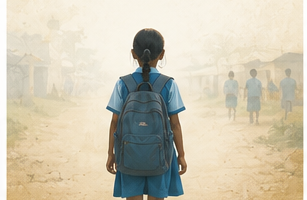
1 in 4 girls misses school every month due to lack of safe menstrual care.

500M
Lack Access
Scroll to explore


800 Million Women. One Day.
Every single day, 800 million women and girls experience their menstrual cycle — yet half lack access to safe, dignified care. This is the world's largest invisible health crisis.
0M
Women daily
0M
Lack sanitation

Scale of the Problem
Menstrual health is a global crisis, measurable in hundreds of millions of lives shaped — and limited — by inadequate care.
Data sourced from WHO · UNICEF · WaterAid · World Bank · Lancet Global Health
School Dropout Crisis
Across the developing world, millions of girls miss school days or drop out entirely because of menstruation. Lack of sanitary products, safe toilets, and persistent stigma force girls into a cycle of educational exclusion.
Infrastructure Gaps
No disposal bins, no running water, no soap, no privacy. The minimum requirements for menstrual dignity are missing for hundreds of millions of people.
Disposal Bins
Schools have dedicated waste disposal bins
Water Access
Schools have safe running water in toilets
Soap Access
Schools provide soap in sanitation facilities
Pad Vending Machine
Schools have on-site pad vending access
Private + Lockable
School toilets have private lockable doors
Fully MH-Friendly
Schools meet ALL menstruation-friendly standards
The Menstruation-Friendly Toilet Standard
Source: JMP / WHO-UNICEF Joint Monitoring Programme 2024
Health & Nutrition
Iron-deficiency anaemia, reproductive tract infections, and nutritional depletion are the silent companions of inadequate menstrual health management — disproportionately affecting those with the least access to care.
Health Impact Monitor
Menstrual health — global indicators
Anaemia Risk
High
RTI Exposure
Severe
Nutrition Gap
Critical
MHM Access
Low
Anaemia Risk Level
Critical
Sub-Saharan Africa
High
South Asia
Biodegradable Pad Innovation
Conventional pads take 500–800 years to decompose. These four natural alternatives offer dignity, affordability, and a future for the planet.
Banana Fibre
Musa Paradisiaca
$0.08 / pad
per pad
Ultra-high absorbency from agricultural waste. 100% compostable in 45 days.
45 days
Biodegrades in
Decomposition
8/10
Production scale
Scalability
9/10
Eco score
Sustainability
Regional SOPs
Menstrual health challenges are shaped by geography, culture, conflict, and resources. One-size-fits-all approaches have failed. Click a region to explore.
Research Institutions
World-leading institutions advancing the science, policy, and practice of menstrual health — from Harvard to IIT Bhubaneswar.

Fund The Mission
Every donation directly funds biodegradable pads, school infrastructure, and community health education across India.
Critical Research Gaps
Where The World
Has Failed Women
Despite decades of advocacy, vast areas of menstrual health remain critically understudied, unfunded, and systemically ignored.
No Waste Management Systems
Globally, there is almost no research-backed framework for menstrual waste collection, treatment, or disposal at scale. Communities improvise — usually by burning, burying, or dumping — with devastating environmental consequences.
No Disability Inclusion
The menstrual health needs of women and girls with physical, cognitive, or sensory disabilities have received almost no dedicated research, policy, or programme attention in any region or income tier.
No Climate Crisis SOP
As climate change displaces millions and disrupts water and sanitation systems, there is no established menstrual health SOP for climate emergency response. This gap is widening as climate events intensify.
Menopause in Displacement Ignored
The experience of menopause — including its physical and mental health dimensions — for women in displaced, refugee, or conflict-affected settings has received near-zero global research investment.
Male Engagement Research Missing
Despite recognition that menstrual stigma requires cultural change across all genders, evidence-based frameworks for male ally education and engagement in MHM are almost entirely absent from global literature.
No Workplace MHM Standards
Workplace menstrual health accommodation — period-friendly policies, flexible scheduling, private sanitation, pain management — has no international standards body and remains entirely ad hoc globally.
AL2050 is building the research agenda to close these gaps. Join the mission.
See Our Action PlanAL2050 Action Plan
Building the future of menstrual dignity through four interconnected pillars — from grassroots innovation to systemic cultural change.
Phase 1
Biodegradable Pad Distribution
2025–2026
- Deploy jute + aloe vera pads in 500 villages
- Partner with SHG networks for local manufacturing
- Establish subsidised distribution at ₹2/pad
- Baseline menstrual health survey in target communities
1
Phase 2
School SOP Implementation
2026–2027
- Menstruation-friendly toilet retrofits in 200 schools
- WASH infrastructure: water, soap, disposal bins
- Integrate MHM into school health curriculum
- Train 1,000 female health monitors
2
Phase 3
Male Ally Education Network
2027–2028
- Train 5,000 male community champions
- School programme for boys 12–16
- Faith leader partnership for stigma reduction
- Evidence-based curriculum development with Oxford
3
Phase 4
Community Incineration Systems
2028–2030
- Install smoke-free pad incinerators in 100 blocks
- Train local operators in safe waste management
- Carbon-neutral incineration technology adoption
- Link to community biogas programmes
4

Dignity Should Never
Be A Luxury.
500 million women deserve better. Join AL2050 in building a world where every woman has access to safe, dignified menstrual care.
AL2050 Global Menstrual Health Intelligence Report — All data sourced from WHO, UNICEF, WaterAid & peer-reviewed research.